
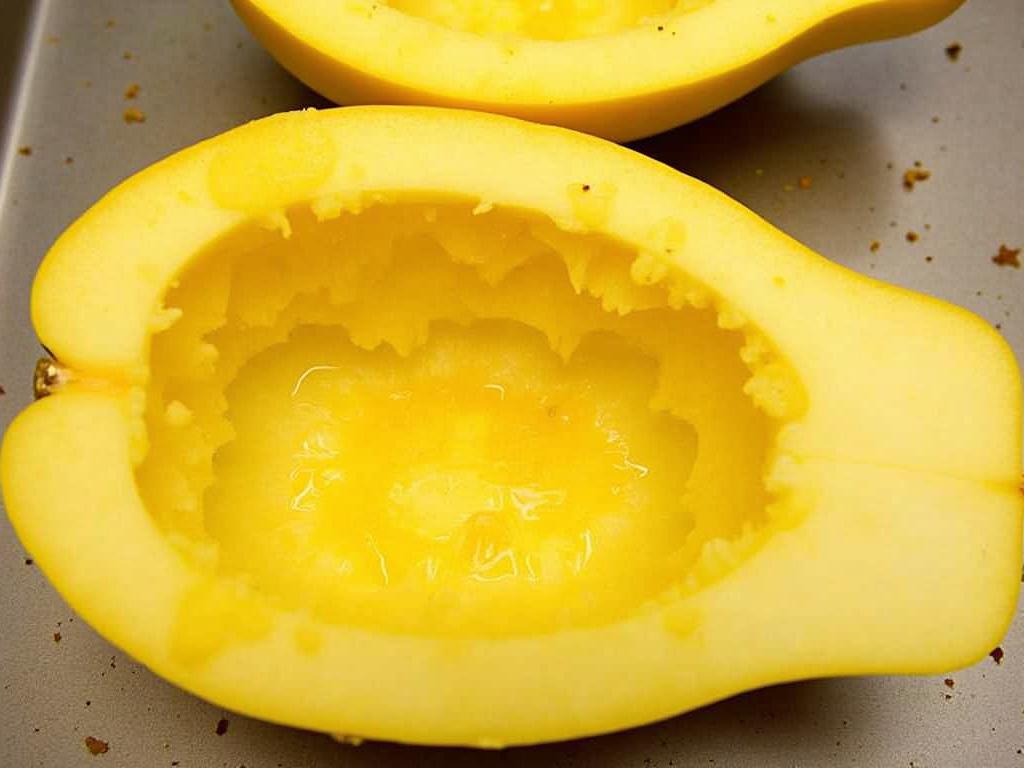
 Preheat your oven to 400°F (200°C). Slice the spaghetti squash in half lengthwise and scoop out the seeds. Drizzle the cut sides with olive oil, sprinkle with salt and pepper, and place them cut-side down on a baking sheet. Roast for 30-40 minutes or until the squash is tender when pierced with a fork.
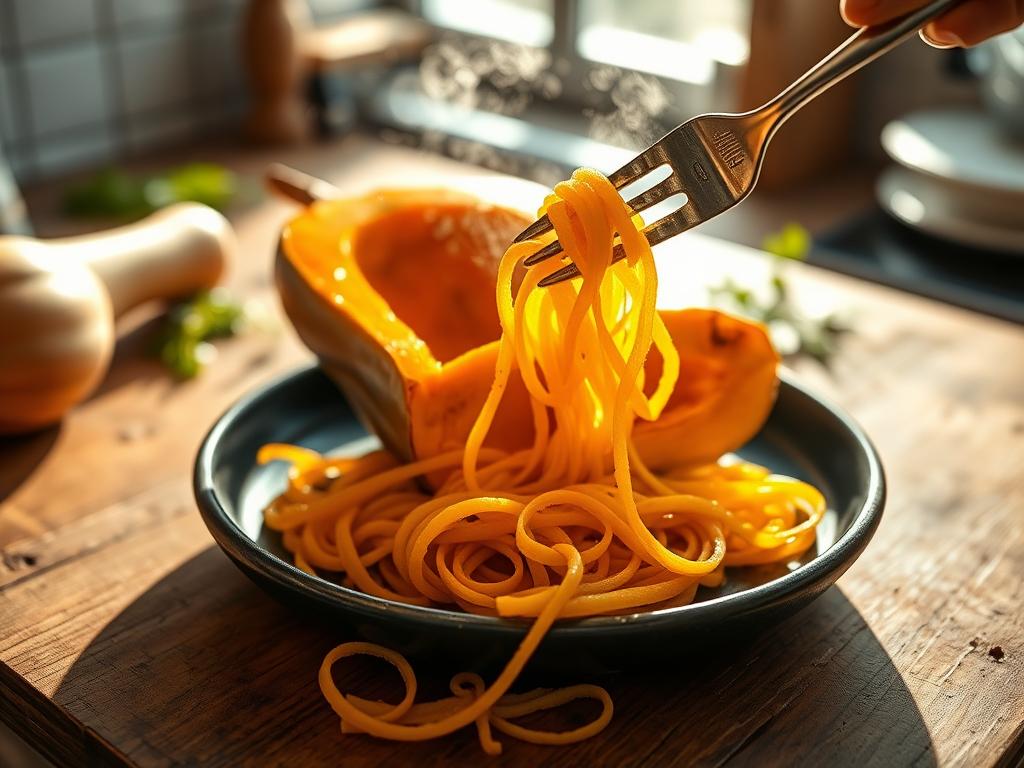 Once roasted, let the squash cool for a few minutes. Then, using a fork, gently scrape the flesh into long, noodle-like strands. Set aside.
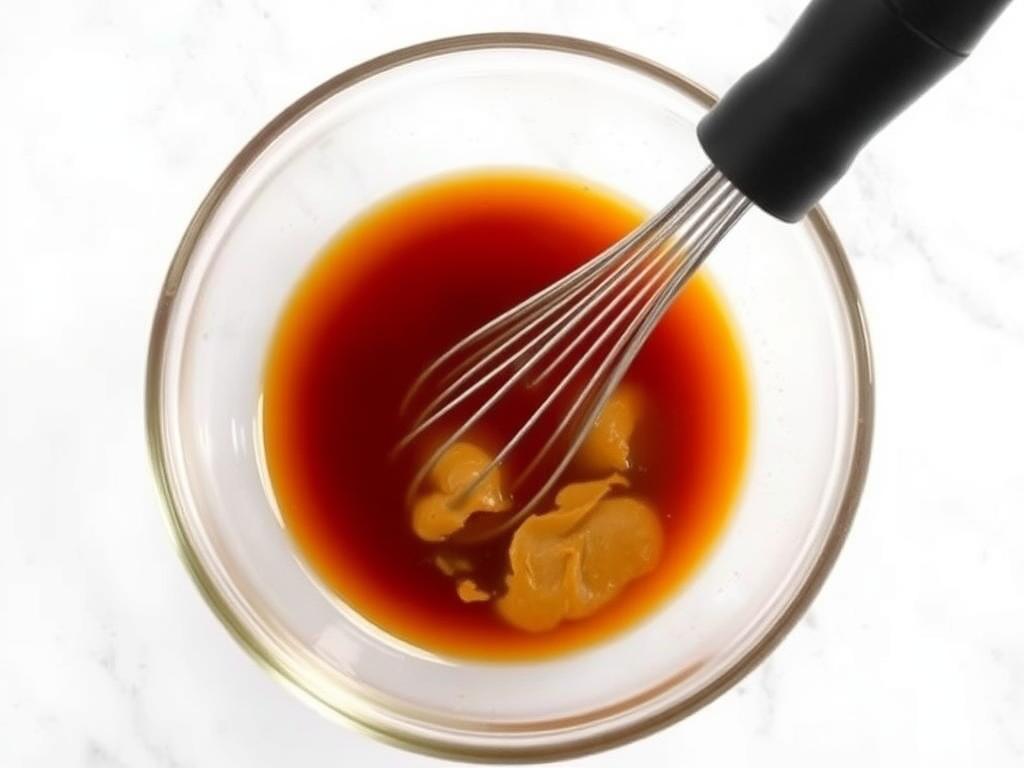 In a small bowl, whisk together 3 tablespoons of soy sauce, 2 tablespoons of fish sauce, 2 tablespoons of lime juice, 2 tablespoons of brown sugar, and 1 tablespoon of peanut butter until smooth.
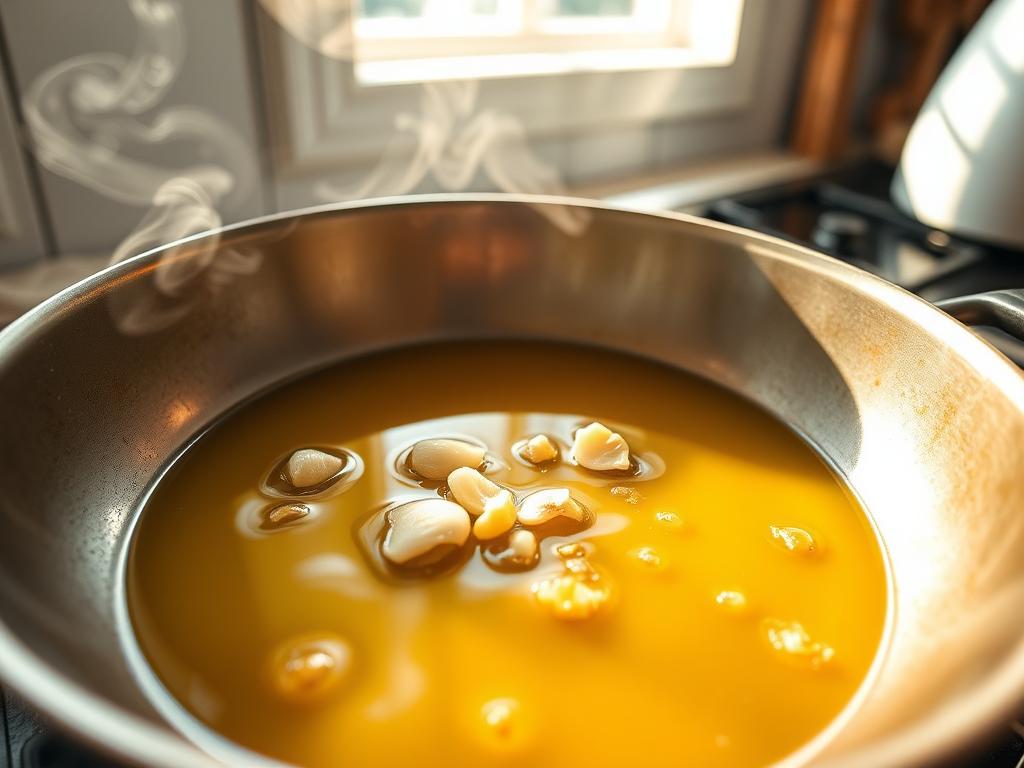 Heat a tablespoon of oil in a large skillet over medium heat. Add 3 minced garlic cloves and a teaspoon of minced ginger. Sauté for about 30 seconds until fragrant.
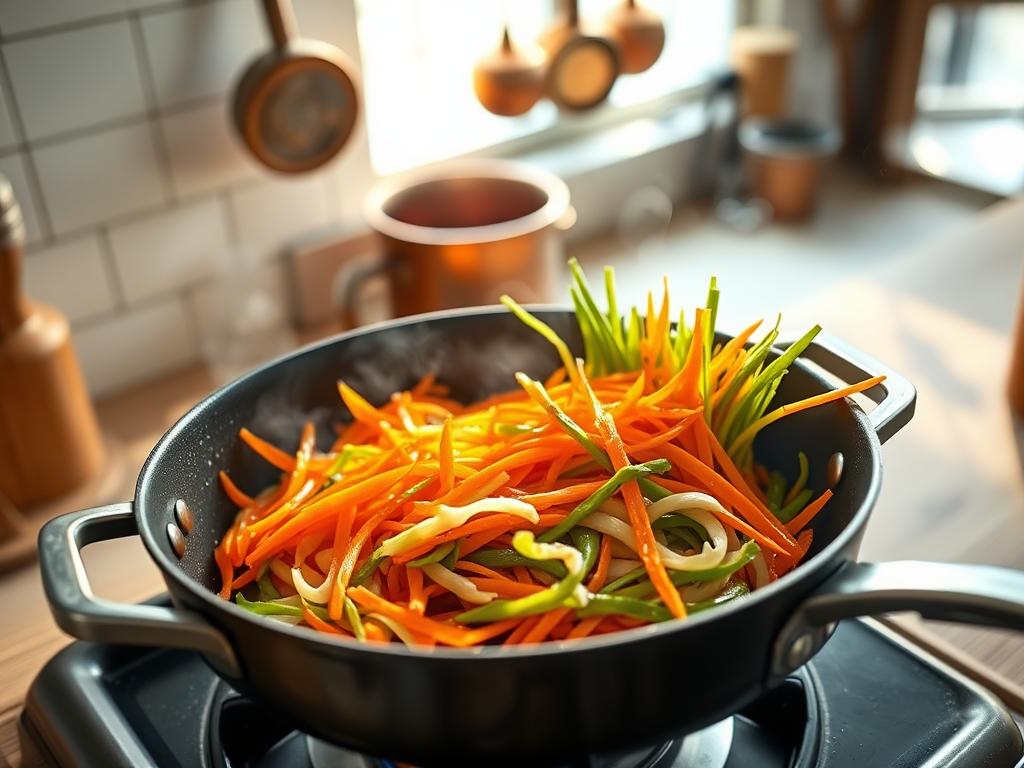 Add a cup of julienned carrots and a cup of bean sprouts to the skillet. Cook for 2-3 minutes, stirring frequently, until the veggies are tender-crisp.
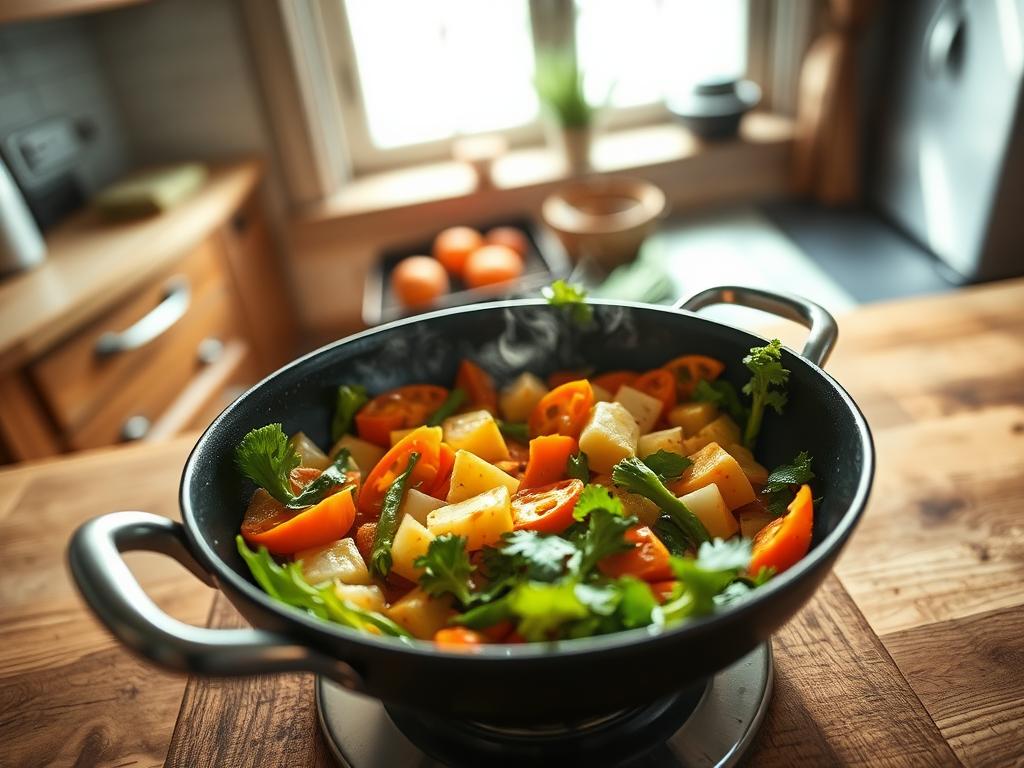 Push the veggies to one side of the skillet, crack 2 eggs into the empty side, and scramble them until just set. Add your choice of cooked protein, like chicken or shrimp.
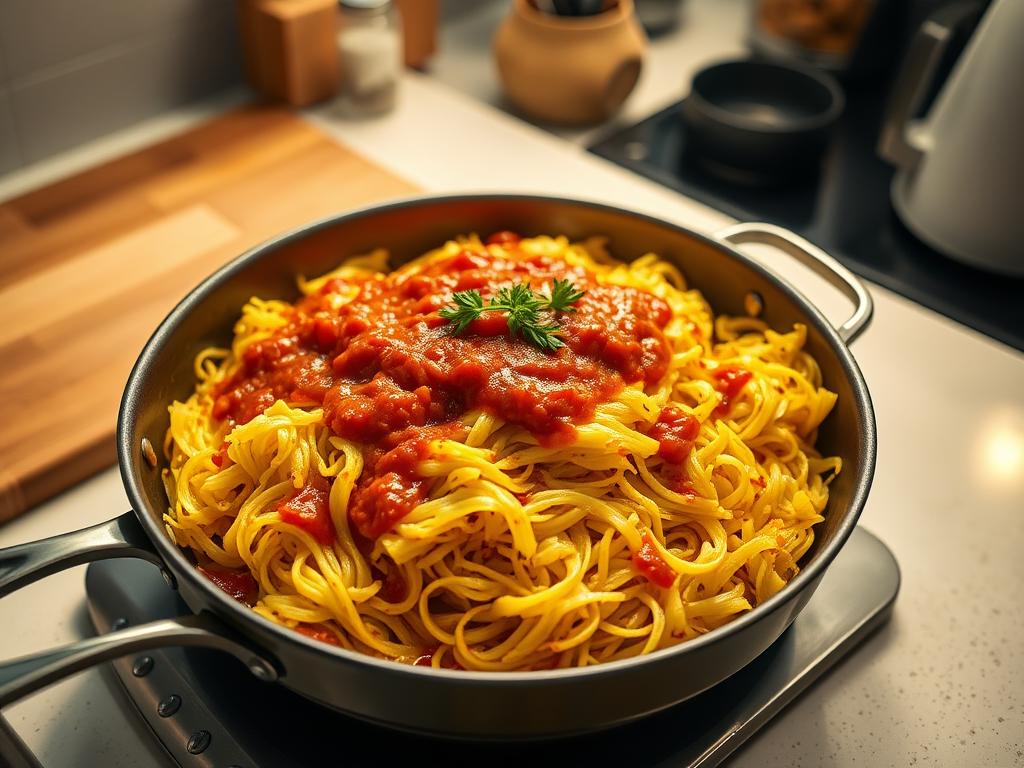 Add the shredded spaghetti squash and sauce to the skillet, tossing everything together until well combined and heated through.
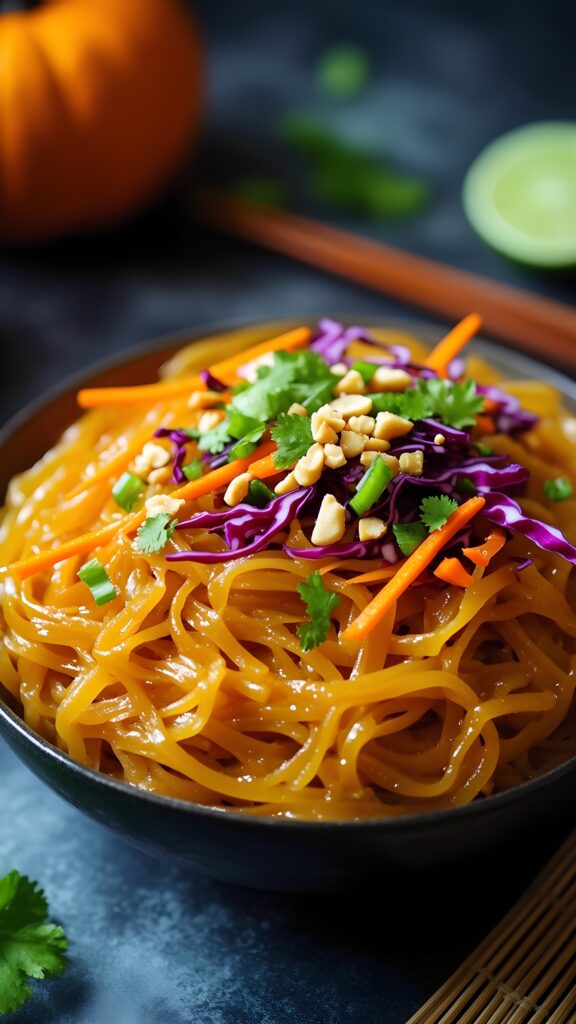
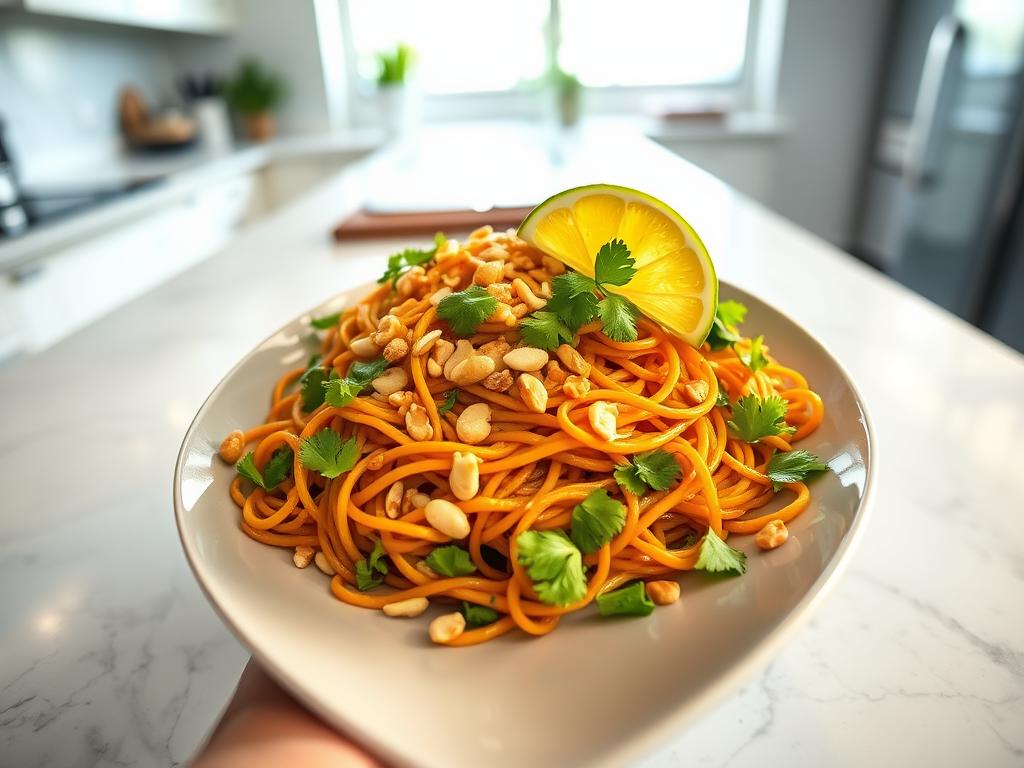 Transfer the Pad Thai to a serving platter. Top with chopped peanuts, fresh cilantro, and lime wedges. Serve immediately.
For a deeper flavor, toast the peanuts lightly in a dry skillet before using them as a garnish. When dealing with the spaghetti squash, be sure to fork the strands gently to maintain their shape and texture. If you prefer a bit more heat, add a pinch of red pepper flakes or a splash of sriracha to the sauce. To achieve a more authentic Pad Thai taste, use tamarind paste in the sauce—it adds a distinct tangy note. Substitute tofu with shrimp or chicken for added protein, adjusting cooking times accordingly. Fresh lime juice is essential for brightening the dish; don’t skip it! For a nut-free version, replace peanuts with sunflower seeds or omit them entirely. If the sauce is too thick, thin it with a splash of water or vegetable broth. Consider swapping the bean sprouts with julienned carrots or zucchini for an extra veggie boost. Always taste and adjust the seasoning toward the end; the balance of sweet, salty, sour, and spicy should be just right. Serve immediately for the best texture, as the squash can become soggy upon sitting. Store leftovers in an airtight container in the fridge for up to two days, reheating gently over low heat to prevent the squash from overcooking.
Let’s take a moment to appreciate the harmony of flavors in our Spaghetti Squash Pad Thai. The sweetness of the squash beautifully complements the tangy tamarind and the savory depth of soy sauce. Each bite is a dance of textures, with the crunch of peanuts and the freshness of bean sprouts adding layers of excitement. It’s a dish that’s both comforting and invigorating, a true testament to the magic that happens when simple ingredients come together in perfect balance.
This dish always brings me back to the first time I attempted a Pad Thai at home. The aroma of garlic sizzling in the pan and the vibrant colors of the vegetables were enough to make anyone fall in love with cooking. Every time I prepare this dish, I’m reminded of those early culinary experiments—sometimes not quite perfect, but always a joyful adventure. It’s a recipe that embodies the spirit of experimentation and the joy of learning through doing.
Serve this Spaghetti Squash Pad Thai with a wedge of lime on the side. A squeeze of lime juice can elevate the flavors, adding a zesty freshness that’s hard to resist. If you’re feeling adventurous, try adding a handful of shrimp or tofu for added protein. For a bit of heat, a sprinkle of chili flakes can do wonders. And if you find yourself with leftovers, fear not! This dish tastes even better the next day, allowing the flavors to meld beautifully.
I invite you to give this recipe a whirl in your own kitchen. Embrace the opportunity to tweak and tinker with the ingredients to suit your taste. I would love to hear about your experiences, any twists you make, or questions you might have. Share your culinary journey with us, because cooking is always more delightful when shared with others. Let’s continue to learn, create, and celebrate the joys of food together.